Sand & cement render
The traditional way, done properly.
Two-coat sand and cement render, applied by hand and floated flat. Ideal for plinths, garden walls, repairs and homes where a classic painted finish is the right look.
 Stock image
Overview
Before modern thin-coat systems, almost every rendered house in the North West was done this way: a scratch coat to key the wall, then a float coat finished smooth or textured, then painted.
It's still the right answer for plenty of jobs, especially plinths below a bellcast bead, garden walls, and matching in repairs on existing cement-rendered houses. We've been doing it for over 20 years.
Hard-wearing
A dense, robust finish that's great at ground level.
Repair matching
Blend new sections into existing cement render.
Smooth or textured
Float, sponge or tyrolean finishes to suit the house.
Paint any colour
Finished in a quality masonry paint of your choice.
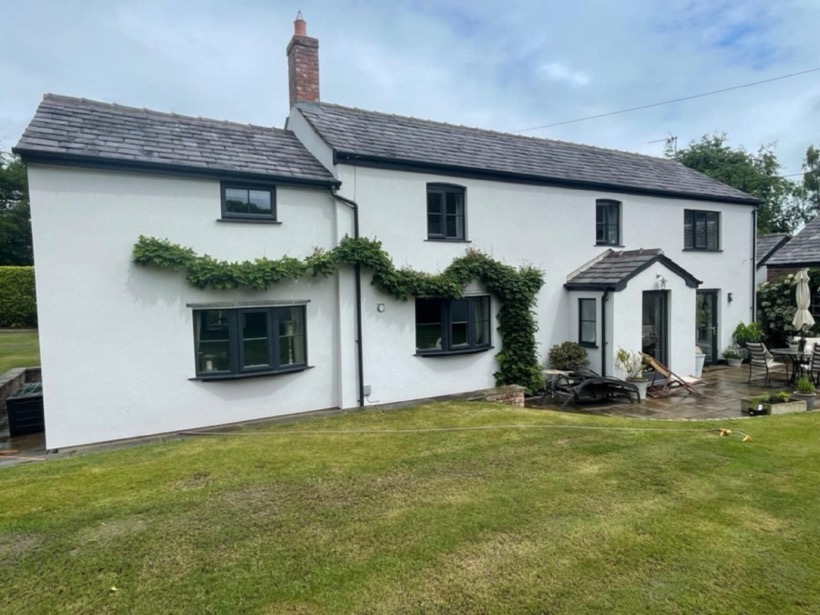 Real job
The spec
What's involved.
- System
- Scratch coat, float coat, masonry paint
- Thickness
- Typically 16–20mm in two coats
- Best for
- Plinths, garden walls, repairs, period properties
- Upkeep
- Repaint every 8–10 years
How we do it
- 01Survey and prep
- 02Beads and stop ends
- 03Scratch coat
- 04Float coat
- 05Cure
- 06Paint
Questions
About sand & cement render.
Is cement render right for an old house?
Not always. Very old solid walls sometimes need a lime render to breathe properly. We'll check at survey and tell you straight.
Why does old cement render crack?
It's rigid, so as the house moves, it cracks, and water gets in behind. That's why we often recommend a modern flexible system for whole elevations.
Free survey · Fixed written price
Want a price for sand & cement render?
Book a free, no-pressure survey. We'll look at your walls, talk through the options and send a clear written price.